Add Real Binaural Beats to Videos & Music You Love
Turn your favourite music, study mixes, lofi streams and ambient videos into powerful focus‑enhancing soundscapes – instantly. When you hear two slightly different tones in each ear, your brain produces a “binaural beat” equal to the difference between them. . Binaural beats between 1‑30 Hz have been associated with deep relaxation (delta), creativity (theta), positivity (alpha) and focused attention (beta). Our extension lets you add these brain‑entraining beats on top of any content you already enjoy.
- One‑click activation from your browser – no downloads or playlists required.
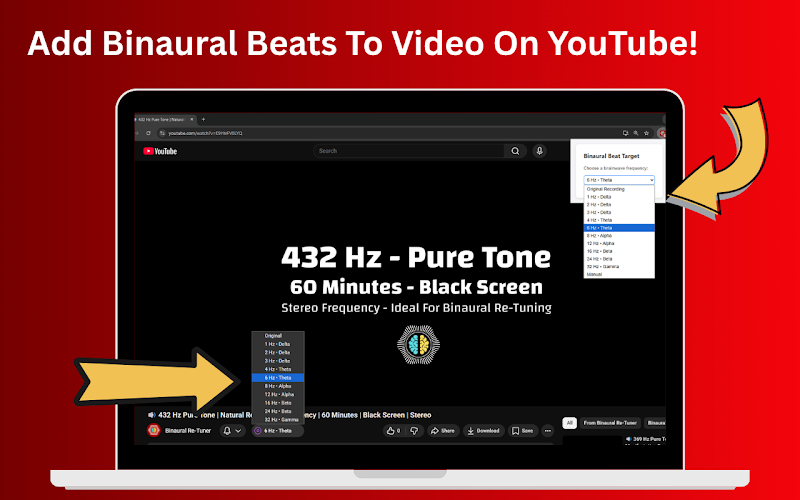
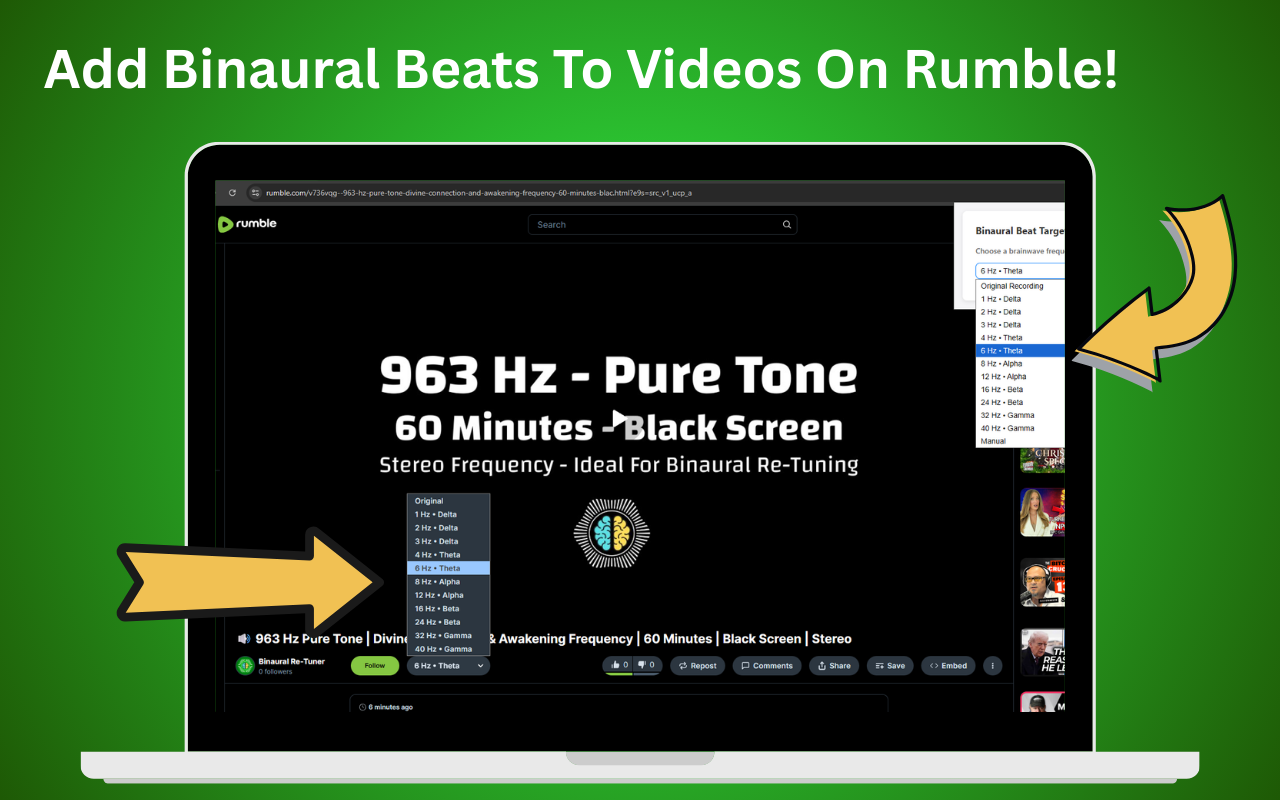
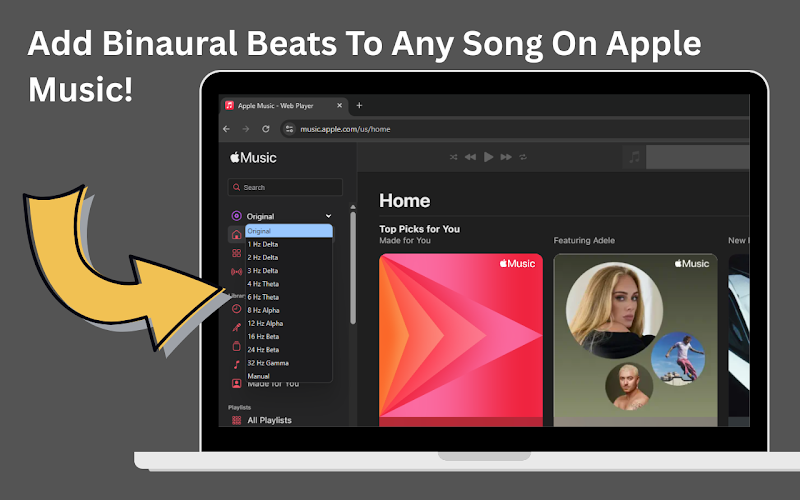
- Works on any YouTube, Rumble or Apple Music content.
- Select Alpha, Beta, Theta or Delta modes depending on whether you need focus, creativity or sleep.
- Includes high‑quality solfeggio pure tones for deeper entrainment.
- Ideal for studying, coding, writing, gaming and deep work.
- Built for PC & laptop users.
“An absolute must have for people seeking higher quality sleep, better focus, less anxiety or dealing with depression.”
What are Binaural Beats and what are they used for?
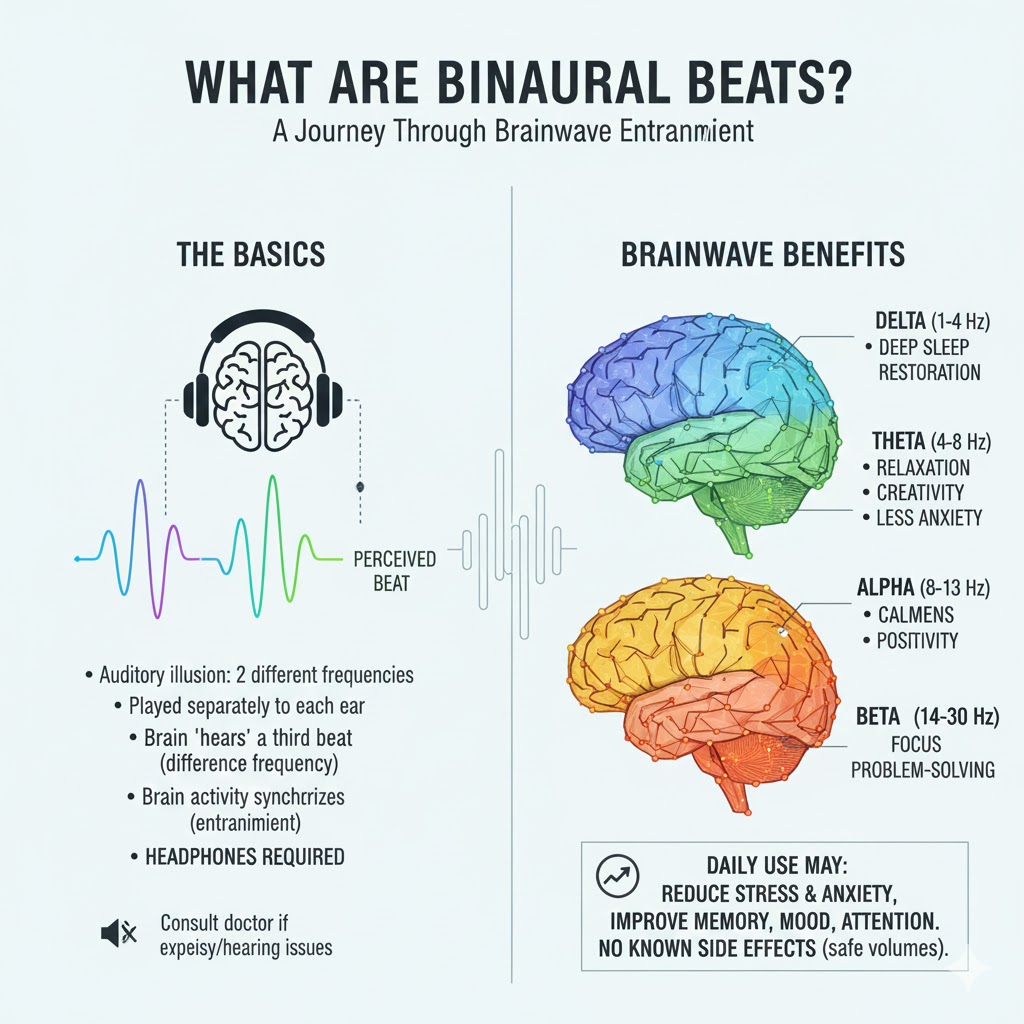
Binaural beats are not music – they’re an auditory illusion created when two different frequencies are played separately to each ear. Your brain perceives a third beat at the difference between them. Researchers call this “frequency‑following” or brain‑wave entrainment, because the brain’s electrical activity tends to synchronise with the beat frequency. In practical terms:
- Delta (1‑4 Hz): associated with deep sleep and restoration.
- Theta (4‑8 Hz): linked to relaxation, reduced anxiety and creativity.
- Alpha (8‑13 Hz): encourages calmness and positivity.
- Beta (14‑30 Hz): connected with alertness, focus and problem‑solving.
Listening to binaural beats daily may reduce anxiety and stress and improve memory, mood and attention. There are no known side effects when used at safe volumes, but headphones are required because each ear must receive a different tone. People with epilepsy or hearing issues should consult a doctor.
People have found Binaural Beats to be helpful for the following issues:
A growing body of research suggests that binaural beats may support several mental‑wellness goals:
| Issue / Goal | How Binaural Beats Can Help (with evidence) |
|---|---|
| Focus & Productivity | Beta‑frequency beats (14‑30 Hz) can enhance concentration and alertness. A 2018 meta‑analysis found that binaural beats can boost cognition and memory. |
| Relaxation & Stress Relief | Alpha and theta ranges (4‑13 Hz) promote relaxation and reduce cortisol, lowering stress. Studies report reduced anxiety when listening to binaural beat tracks. |
| Sleep & Recovery | Delta beats (1‑4 Hz) encourage deep sleep; some trials report better sleep quality and reduced nighttime pain. |
| Creativity & Mood | Alpha/theta beats foster meditative states and positive mood. |
| Meditation Training | Binaural beats may help achieve meditative brain‑wave states more quickly than silence. |
| Pain Management | Preliminary studies suggest binaural beats can help manage pain. |
(Results vary by individual and frequency. More research is ongoing.)
Binaural Beats vs Isochronic tones - what the difference?
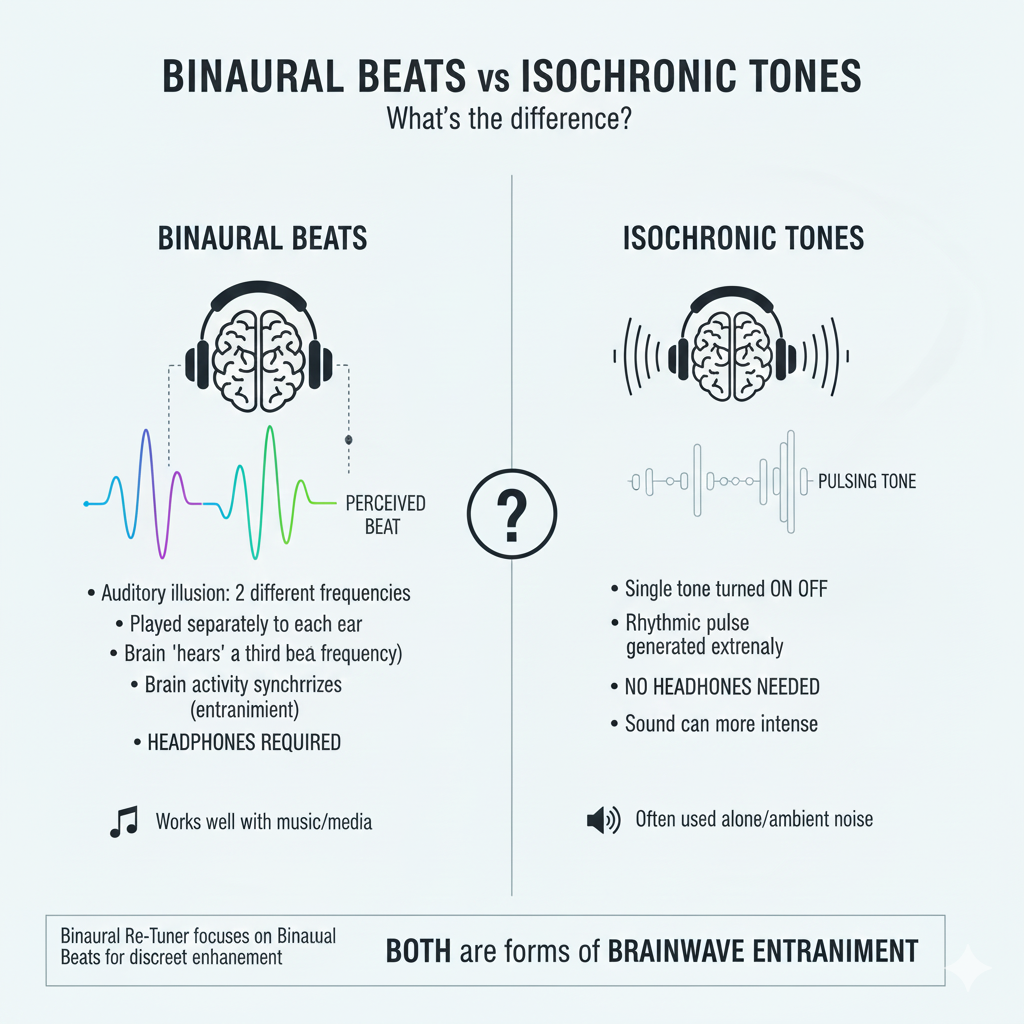
Binaural and isochronic tones are both forms of brain‑wave entrainment, but they’re produced differently:
- Binaural beats: Two continuous tones of slightly different frequencies are played separately to each ear. The beat is perceived inside your head and headphones are required.
- Isochronic tones: A single tone is turned on and off at regular intervals, creating a rhythmic pulse. Because the beat is generated externally, you don’t need headphones and the sound can be more intense.
Binaural beats work well with music because you can overlay them on your favorite tracks. Isochronic tones are often used alone or with ambient noise and can feel more intrusive. Binaural Re‑Tuner focuses on binaural beats so you can discreetly enhance your existing media without distracting clicks.
Binaural Beats with pure tones vs ambient music
Many apps deliver binaural beats as stand‑alone tones – pure sine waves at specific frequencies. This is useful for meditation and sleep, but it can feel sterile or monotonous. Adding binaural beats to music or video combines entrainment with the motivational power of your favorite songs, making it easier to stay engaged. Our extension offers both:
- Pure Tone Library: access 49 stereo pure‑tone videos on our YouTube & Rumble channels. Choose delta, theta, alpha or beta beats for meditation, relaxation or focus.
- Real‑Time Re-Tuning: overlay binaural beats onto any YouTube, Rumble or Apple Music track. Instead of switching playlists, you can keep listening to the artists and genres you love while benefiting from brain‑wave entrainment.

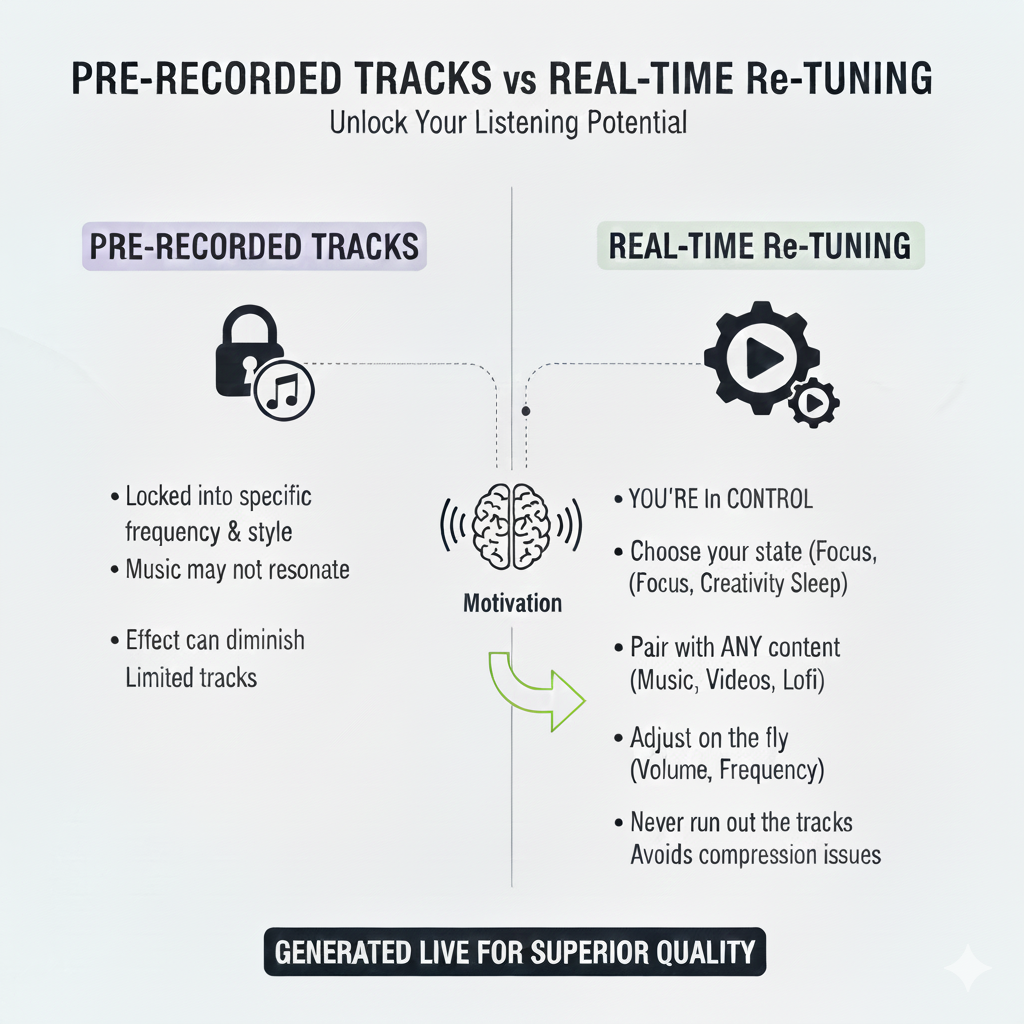
Pre recorded tracks vs real time Re-Tuning
Pre‑recorded binaural beat tracks lock you into a specific frequency, tempo and style. If the music doesn’t resonate with you, the effect can diminish. With Binaural Re‑Tuner, you’re in control:
- Choose your state: switch between focus (beta), creativity (alpha/theta) or sleep (delta) at any time.
- Pair with any content: layer beats on pure tone, music, soundtracks or lofi mixes.
- Adjust on the fly: change volume and frequency without leaving the video or playlist.
- Never run out of tracks: your entire YouTube, Rumble and Apple Music libraries become potential brain‑entrainment sessions.
Because our extension generates the beats live, you avoid the compression and mixing artefacts common in pre‑made binaural music.
The Binaural Re-Tuner browser extension
Binaural Re‑Tuner is a lightweight browser extension that adds professionally‑calibrated binaural beats to any streaming audio. After installing, simply click the icon on YouTube, Rumble or Apple Music, choose a brain‑wave mode, and enjoy enhanced focus or relaxation without switching apps. The extension works on Chrome and Edge for PC and laptop users. Your subscription unlocks all modes, pure‑tone libraries and future updates.
Benefits of Binaural Beats
Binaural beats may seem simple—just two slightly different tones played separately in each ear—but their potential effects on the mind and body are compelling. When your brain perceives this third “phantom” beat, it tends to synchronize its own electrical activity to the beat’s frequency. Studies suggest that different frequency ranges can support different mental states, though results vary from person to person:
| Frequency Range (Brain Waves) | Potential Benefits | Evidence & Notes |
|---|---|---|
| Delta (1–4 Hz) | Deep sleep, physical restoration, decreased insomnia | Delta beats are associated with restorative sleep; small studies report improved sleep quality and fewer nighttime awakenings. |
| Theta (4–8 Hz) | Relaxation, meditation, creative insight | Theta beats are linked to reduced anxiety and meditative states; they’re often used to enhance creativity or visualization. |
| Alpha (8–13 Hz) | Calm focus, stress reduction, positive mood | Alpha frequencies encourage relaxation and positivity. They may lower cortisol and help calm the nervous system. |
| Beta (14–30 Hz) | Alertness, concentration, problem‑solving | Beta beats stimulate active thinking and attention. Many users report improved focus during study or work. |
| Gamma (30–100 Hz) | High‑level cognition, memory and learning | Gamma frequencies are associated with enhanced memory recall and complex problem solving, but research is mixed and effects may vary. |
Additional reported benefits of binaural beats include improved mood, reduced anxiety, pain management and enhanced creativity. However, results depend heavily on factors like the listener’s physiology, the exact frequencies used and the listening environment. Binaural beats should not be considered a standalone treatment for health problems; they’re best viewed as a complementary tool.
FAQ about Binaural Re-Tuner
Are Binaural Beats safe?
For most people, listening to binaural beats is considered low‑risk. Healthline notes that there are no known lasting side effects, but it’s important to keep the volume at a safe level to avoid hearing damage. WebMD echoes that binaural beats are “low‑risk and easy to try at home with just headphones and an internet connection. If you have epilepsy, a neurological disorder or are sensitive to repetitive sounds, consult a healthcare professional before using them.
Do I need to prepare in any way?
For the best experience, find a quiet, comfortable place where you won’t be disturbed and wear stereo headphones (binaural beats rely on delivering separate tones to each ear). Many practitioners recommend listening for at least 15–30 minutes to allow your brain to entrain to the beat. Start at a low volume and gradually increase to a comfortable level. Avoid using binaural beats while driving or performing tasks that require your full attention.
Do I need special equipment?
No specialized hardware is required beyond a pair of stereo headphones or earbuds, because each ear must receive a different tone. High‑quality headphones may improve the listening experience, but any stereo pair will work. Binaural Re‑Tuner runs as a browser extension, so there’s no need for additional software or expensive gear—just your computer, your favorite headphones and an internet connection.
What if I am inexperienced with sound healing?
Binaural beats are a simple entry point into sound‑based wellness. You don’t need prior experience; just choose a frequency range that matches your goal (see the table above) and listen with headphones. Because the beats are subtle, you may not “feel” anything physically. Start with short sessions and see how your body responds. If you find a certain frequency irritating or uncomfortable, switch to another or take a break.
Is using Binaural Beats are scary experience?
Not at all. Most people report that they either notice a gentle pulsing or barely notice the beat at all. There are no psychoactive effects—binaural beats simply encourage the brain to produce certain patterns of electrical activity. If you ever feel uneasy, stop listening or switch frequencies. Remember to keep the volume reasonable and avoid other sensory distractions.
Will using it make me feel uncomfortable?
Discomfort is rare, but it can occur if the volume is too high or if the frequency doesn’t suit your current state. Individuals who are sensitive to repetitive sounds might experience headaches or irritation. In general, listening at low to moderate volumes and experimenting with different frequency ranges can help you find what feels best for you. If discomfort persists, stop using binaural beats.
Which Binaural Beat is the best?
There isn’t a single “best” binaural beat—the optimal frequency depends on your goal. For sleep, use delta (1–4 Hz); for meditation and creativity, try theta (4–8 Hz); for calm focus, select alpha (8–13 Hz); for productivity, choose beta (14–30 Hz). Gamma beats (30–100 Hz) are sometimes used for learning and memory. Binaural Re‑Tuner lets you switch modes with a click so you can experiment and see which frequencies support your desired state.
Do Binaural Beats work the same for everyone?
Evidence suggests that responses vary between individuals. A 2018 meta‑analysis found binaural beats can boost cognition and reduce anxiety, but effectiveness depends on the frequency used and the listener. WebMD emphasizes that reactions differ—some people find binaural beats effective, while others find them distracting or unhelpful. Your physiology, brain chemistry and listening environment all play roles. Experimentation is key: try different frequencies and session lengths to see what works best for you.
Featured Headlines